
 UK
UK
 Europe
 Netherlands
How to Choose the Right High-Vacuum Components for Research Labs
In a research lab, the smallest detail can make or break an experiment. A microscopic leak. A trace contaminant. A component that behaves unpredictably under heat or pressure. These aren’t minor issues in high and ultra-high vacuum environments. They’re the difference between reliable results and months of wasted time.
That’s why choosing the right high-vacuum components isn’t just a procurement task. It’s a critical decision that directly affects your research outcomes.
With decades of experience supporting advanced research and development (R&D) environments, Testbourne has built a reputation for helping laboratories get this decision right.
Why High-Vacuum Component Selection Matters More Than You Think
If you’re working in areas like semiconductor research, thin-film deposition or surface science, you already know the importance of maintaining a clean, stable vacuum. But what’s often underestimated is how much your components influence:
- Data accuracy
- System stability
- Maintenance frequency
- Long-term reliability
Even a single poorly matched component can introduce outgassing, leaks or thermal instability, problems that are notoriously difficult to diagnose once your system is running.
What to Look for in High-Vacuum Components
1. Absolute Vacuum Integrity
At its core, your vacuum system is only as good as its weakest seal. High-quality components, particularly feedthroughs and connectors, must maintain a perfect seal under demanding conditions. This is where precision engineering matters.
Testbourne’s ceramic-to-metal feedthroughs are designed specifically for ultra-high vacuum (UHV) environments, offering exceptional leak tightness and long-term performance you can rely on.
2. Material Purity Isn’t Optional
In vacuum environments, materials behave differently. Even high-grade materials can release gases (outgassing) that contaminate your chamber system and compromise results. That’s why high-purity materials are essential to maintain integrity, not just preferable.
Testbourne specialises in sourcing and supplying ultra-high purity metals, alloys and ceramics, helping labs minimise contamination and maintain experimental integrity.
3. Performance Under Real-World Conditions
Your system doesn’t operate in a vacuum (well, technically it does, but not in ideal conditions)
You may be dealing with:
- Extreme temperatures (both hot and cryogenic)
- Reactive gases or corrosive environments
- High-energy processes
Your components need to perform consistently through all of it. Testbourne’s UHV solutions are engineered to handle these extremes, ensuring your system remains stable even under pressure.
4. One Size Rarely Fits All
Every research setup is different. What works perfectly in one system might fail in another. That’s why off-the-shelf solutions don’t always cut it.
One of Testbourne’s key strengths is working directly with engineers and scientists to develop custom or application-specific solutions, whether that’s a bespoke feedthrough or a fully integrated vacuum assembly.
5. Think Beyond Components. Think Systems
It’s easy to focus on individual parts. But performance comes from how everything works together.
Modern labs need seamless integration between vacuum systems and instrumentation. especially in areas like thin-film deposition or measurement. Testbourne supports this with a broader ecosystem of solutions, including:
- Thin-film measurement technologies
- Quartz crystals and monitoring systems
- Vacuum evaporation sources
- Advanced material processing equipment
This joined-up approach helps reduce compatibility issues and improves overall system performance.
6. Expertise Makes the Difference
Here’s the reality: even the best components won’t help if they’re not the right fit for your application. That’s where experience comes in. Testbourne doesn’t just supply products. We work alongside research teams to:
- Understand application requirements
- Recommend the most suitable components
- Support system design and optimisation
This consultative approach helps labs avoid costly mistakes and get to reliable results faster.
Common Pitfalls (and How to Avoid Them)
Many labs run into the same setbacks when selecting vacuum components:
- Choosing materials that introduce contamination
- Overlooking how components behave at extreme temperatures
- Using generic parts instead of application-specific solutions
- Underestimating the value of expert guidance
These problems often don’t show up immediately, but when they do, they’re expensive and time-consuming to fix. Working with a specialist like Testbourne significantly reduces that risk.
Why Partner with Testbourne?
There’s a reason Testbourne is trusted by research labs around the world. Our team combines:
- Over 40 years of industry experience
- A vast portfolio of high-vacuum and high-purity products
- Strong partnerships with leading manufacturers
- A genuinely collaborative, problem-solving approach
In high-vacuum research, there’s no margin for compromise. The components you choose directly impact your results, your timelines and your success.
By focusing on quality, compatibility and expert support - and by partnering with a proven specialist like Testbourne - you can build systems that perform exactly as your research demands.
Related
How to Source High Purity Materials with Testbourne
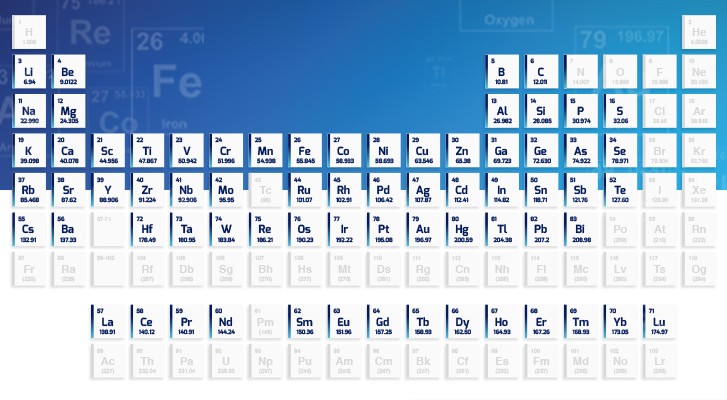
26 Aug 2025Quickly find high-purity materials by element with Testbourne’s interactive periodic table. Explore forms, specs and get expert support.
The Importance of High-Purity Materials in Scientific Research
02 Jan 2025Testbourne remains at the forefront, ensuring that researchers and engineers have access to high-purity materials, needed for transformative results.